2026-03-10
"Pig chip," a term that sounds somewhat like science fiction, once again became a hot topic of discussion among delegates and members of the National People's Congress and the Chinese People's Political Consultative Conference this year. Liu Yonghao, a National People's Congress delegate and chairman of New Hope Group, stated bluntly: "The core of the pig chip problem lies in the source of the breed, and the key lies in the technology." He emphasized that while my country has achieved 100% self-sufficiency in pig breeding stock, truly mastering the "Chinese pig chip" requires independent innovation in breeding technology, with chips and algorithms being particularly crucial.
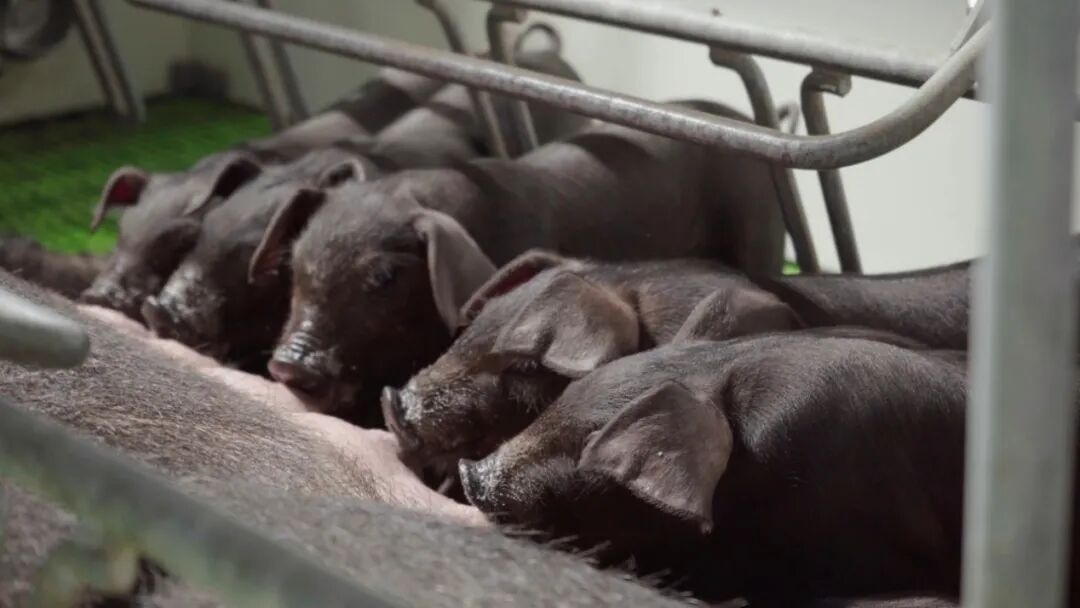
In a core breeding farm deep in the mountains of Sichuan, this technological breakthrough has already been concretely demonstrated. Just 14 days old, piglets are still nursing in their sows, but their fate has already been "spoiled" by a tiny chip—within a week, a detailed report on over thirty indicators, including growth rate, feed conversion rate, and reproductive performance, will be generated and placed on the breeders' desks. This isn't science fiction; it's a daily reality in the New Hope breeding laboratory, supported by the "pig chip" independently developed by the Chinese.
From 10K to 60K—A "Resolution Leap" in Gene Decoding
The birth of this "pig chip" is a long-distance technological marathon of continuous iteration.
Rewinding to 2022, the New Hope breeding team developed the first 10K low-density liquid-phase SNP chip for pigs and began its application and promotion. Although the first-generation chip could already achieve early selection, the team was not satisfied—there was still much room for improvement in the efficiency, stability, and ease of data utilization of the detection process.
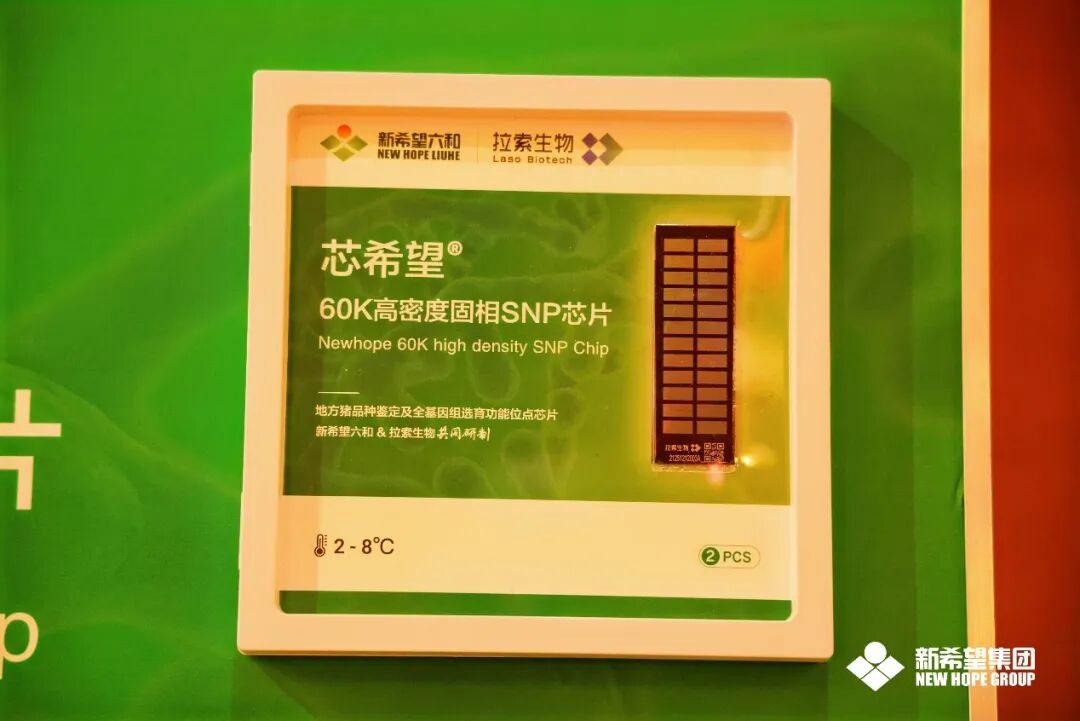
In August 2024, they launched a sprint towards an even higher peak: developing a 60K high-density solid-phase SNP chip for pigs. This was a leap from "standard definition" to "high definition."
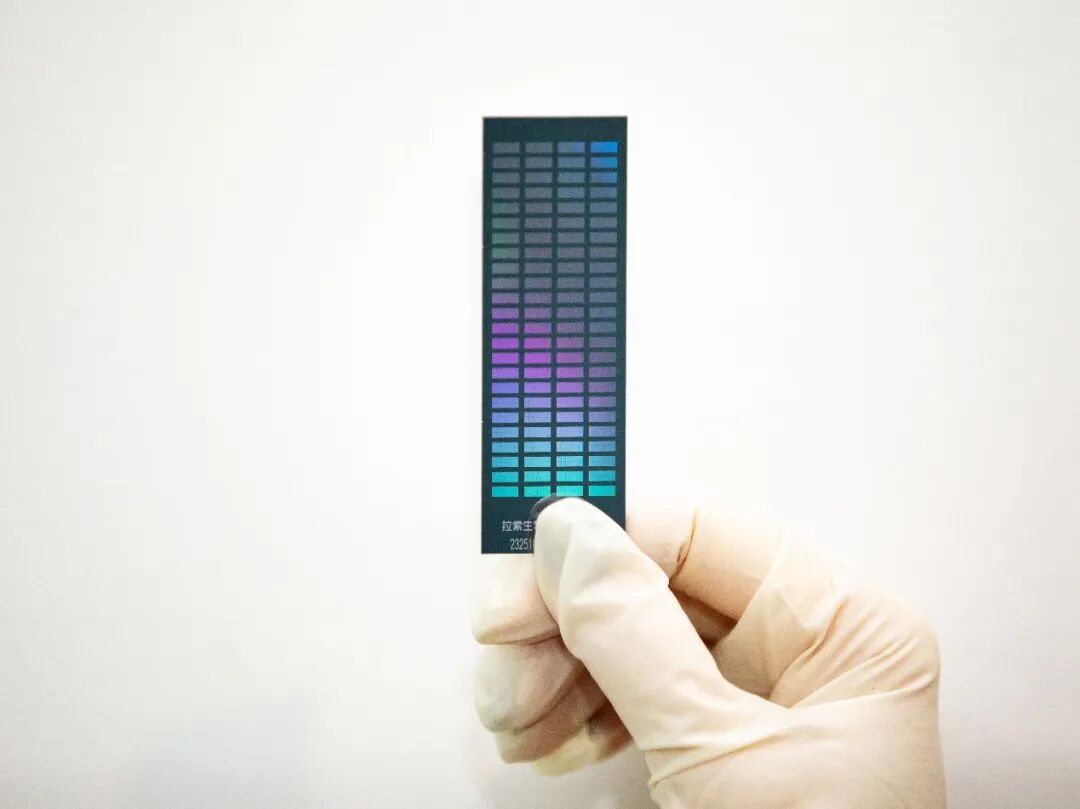
Three major hurdles stood in their way on the road to research and development. The first hurdle was SNP site screening—precisely locating key sites affecting economic traits in pigs from a massive number of gene loci is like finding a needle in a haystack. The second hurdle was the selection and adaptation of sites for local pig breed identification; currently, there are no similar products on the market. The third hurdle was cost control—ensuring performance while making it affordable for farmers.
How to break through these challenges? New Hope chose a path of collaborative innovation involving industry, academia, research, and application. Leveraging the functional site selection technology of Academician Zhao Shuhong's team and the SMIC-1 chip technology of Academician Huang Lusheng's team, they integrated multi-source sequencing data, focused on key breeding traits, and screened out high-quality SNP sites. Combined with the accumulated research achievements of Professor Liu Jianfeng's team at China Agricultural University in local pig research—the convergence of multiple sources of wisdom ultimately overcame the difficulties.
In December 2025, the 60K high-density solid-phase SNP chip for pigs was successfully tested. From the start of research and development to the final breakthrough, it only took one and a half years. This chip precisely encompasses functional gene loci of various Duroc, Landrace, and Large White pig breeds, covering key economic traits such as growth rate, feed efficiency, and meat quality. Simultaneously, the detection cycle is shortened to 7 days, increasing efficiency by 50%.
More importantly, it is the first chip in China capable of identifying and managing the genetic resources of multiple local pig breeds for commercial use. "It can accurately identify the iconic gene markers of purebred local pigs, assisting in the preservation of local breeds; it can explore the genetic resources of superior traits in local pigs, accelerating the selection and improvement of local pigs; and it can support traceability and quality assurance across the entire industry chain," explained Dr. Jing Lu, Breeding Technology Director of New Hope Pig Industry and Director of the Key Laboratory of Digital Breeding Technology Innovation for Pigs and Poultry of the Ministry of Agriculture and Rural Affairs.
This means that in the future, consumers may be able to buy "new-style local pork" that retains the flavor of native pork while possessing high yield performance.
A chip—seeing through the "past and present" of a pig
The magic of this chip goes far beyond its technological breakthroughs.
In traditional breeding methods, determining a boar's breeding value requires waiting until it's five or six months old and observing its performance before selection, necessitating the large-scale breeding of boars. This long cycle, high cost, and low efficiency have been long-standing problems plaguing the industry. Now, however, the early selection time has been compressed to 14 days old, increasing selection accuracy by 40% to 60% and reducing the number of boars tested by 60%.
"This chip is like giving the pig a whole-genome 'physical examination'," Jing Lu explained vividly. It can not only accurately predict core economic traits such as growth rate, feed efficiency, and litter size, but also identify breeds, trace kinship, and even verify the identity of local pig breeds.
It is estimated that this technology can increase the efficiency of New Hope Liuhe's entire pig industry by approximately 172 million yuan annually. Among these benefits, early breeding technology reduced sales losses from breeding boars by approximately 5.71 million yuan; increased litter size added 31.1 million yuan in profit annually; and improved feed efficiency reduced the feed conversion ratio for commercial pigs, potentially increasing profits by 135 million yuan annually.
Even more encouraging is that this domestically produced chip boasts a typing accuracy of ≥99%, on par with top international chips, while its cost is approximately 70% lower than imported chips. This means that more farms can afford this advanced technology, accelerating the genetic improvement process across the industry.
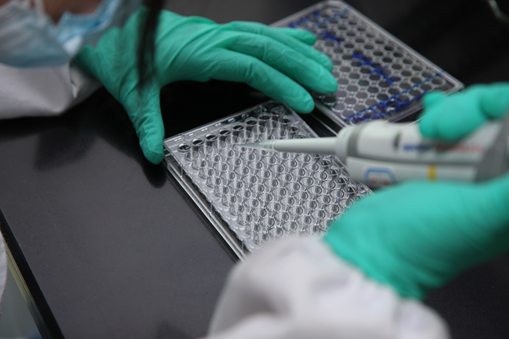
Currently, this chip has been fully implemented in New Hope's eight core breeding farms nationwide. The new genomic breeding technology it carries accelerates the improvement of breeder performance. The testing volume is projected to reach 37,000 heads by 2026, covering all 30,000 core herds and extending to 16 million commercial herds through the breeding system. More notably, through the "Sichuan Pig Core Swine Breeding Innovation Consortium," this technology has been promoted to some swine breeding enterprises in Sichuan and Chongqing, with applications covering multiple provinces including Sichuan, Shandong, Guangdong, Guangxi, Hubei, and Jiangxi.
From Chips to Ecosystem—A Digital Revolution in Pig Farming
If the "pig chip" itself is a technological breakthrough, then it has ushered in a digital revolution in pig breeding.
In New Hope's strategic plan, this chip is becoming a "data foundation," connecting three major technologies: genomic breeding technology, intelligent breeding algorithms, and AI-powered intelligent measurement, forming a closed-loop synergy of "chip-based gene measurement → AI-based phenotypic collection → algorithm-based breeding value calculation → full-process selection and mating."
"This marks a leap from 'experience-driven' to 'data-driven intelligence' in breeding," the New Hope breeding team defines it.
Specifically, genomic breeding technology combined with pig microarrays constructs a precise genotyping foundation; intelligent breeding algorithms, through the self-developed HugeBLUP engine and the "Xiujie Hepu" system, achieve one-step multi-trait ssGBLUP, genomic breeding value calculation, and combining ability prediction, transforming massive amounts of data into executable breeding decisions; AI intelligent measurement connects genotype and phenotype, constructing a multi-omics-phenotype association model to accurately locate the causal relationship between functional genes and traits.
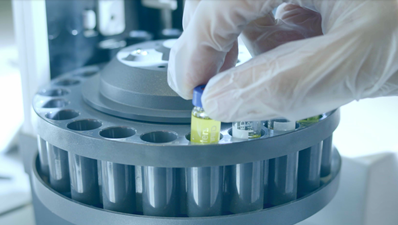
This collaborative system is reshaping the efficiency of the entire pig breeding process. In the future, New Hope will also explore using resequencing data for genomic breeding, conducting genomic testing for propagation and commercial populations, combining bio-breeding technologies to propagate and promote superior individuals, and even using gene editing technology to perform targeted editing of key functional gene loci.
From "reliance on imported breeds" to "autonomous control," from "experience-based breeding" to "data intelligence," China's pig breeding industry is undergoing a profound transformation. As Yin Yulong, a deputy to the National People's Congress and an academician of the Chinese Academy of Engineering, said: "The key to holding the 'Chinese pig chip' in our own hands lies in scientific and technological breakthroughs." And this tiny "pig chip" is the best illustration of this transformation.

 Tel:028-65721666
 Address:No. 366 Jinshi Road, Jinjiang District, Chengdu City, Sichuan Province, Zhongding Internationa
 Email:contact@newhope.cn
 New Hope Group Official Account
 New Hope Audit Official Account
 Yonghao Foundation Official Account
© 新希望集团2025 蜀ICP备09024865号